Results
Number of results: 15393
-
 Restaurants and CafésCastelo
Telephone: +351 241 635 057 / 918 431 005
E-mail: ocastelobelver@gmail.com
-
-
Bars and DiscothequesCastelo Bar
Telephone: 21 932 72 13
Website: http://www.castelobar.cuconet.com/
-
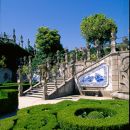 Towns and VillagesCastelo BrancoThe origins of Castelo Branco can be found in Roman times with the settlers who established Albi Castrum on the slopes of the Cardosa hill. In 1214, king Afonso II bestowed this land on the Order of the Templar Knights, entrusting them with its (...)
-
 OtherCastelo Branco EmbroideryKnown to have been in production between the 17th and 19th centuries, the first reference to this local style was made by Jaime Lopes Dias, at the 4th Beirão Congress held in Castelo Branco in 1931. He called for greater recognition of this form of (...)
-
MonumentsCastelo da Amieira do TejoBelieved by some authors to have been the first Gothic castle built in Portugal, Amieira do Tejo castle stands as an important testament to 14th-century military architecture.This small medieval castle, which has a rectangular floorplan, features (...)
-
MonumentsCastelo da LousãThe castle is formed by the keep, whose base adds to its imposing majesty, a small wall and some cubic turrets. The whole of the castle is built of Silurian schist, the local stone, except for the decoration of the door of the keep, which is made of (...)
-
MonumentsCastelo de AbrantesThe fortress consists of mediaeval fortifications strengthened with bastions. The mediaeval castle still preserves its keep and some sections of wall with round turrets. Your attention is drawn to the brick-vaulted spaces.
-
 MonumentsCastelo de AlandroalThe huge keep dominates the castle and the town. Of particular interest here is the gate flanked by towers and a horseshoe arch, built of local marble. Close by is the parish church of Nossa Senhora da Graça.
-
MonumentsCastelo de Alcácer do SalSome sections still remain of the mud and stone wall that once surrounded the town. The central fortress was adapted to form a convent.You can still see the ruins of the Convent and Church of Santa Maria do Castelo, built in the Romanesque-Gothic (...)