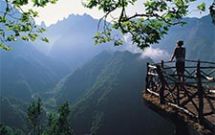
With an area of 448km2, the Island of Pico is the second largest in the Azores and one that is home to Portugal’s highest mountain, also called Pico, at 2,351m above sea level. Often referred to as the Mountain Island, Pico forms one of the points (...)
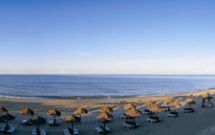
With about 200 kilometres of coastline, great weather and calm waters, the Algarve is ideal for sailing, even if you don’t own a boat, since there’s always the option to rent one or to join the cruises that explore the beauty the coastline. Seeing (...)
Repeatedly considered to be the best golfing destination in the world by magazines devoted to the sport and by international associations of specialist tour operators, the Algarve lives up to this distinction by maintaining an unrelenting quality. (...)
Discover a completely different Algarve – nestling in its green and peaceful hinterland are traditional villages and spectacular landscapes. How do you reach this world preserved from the past? Nothing could be easier… just follow the arrows! Marked (...)
Located in the estuary of the River Arade, Portimão is known for its excellent sandy beaches with plenty of warm, calm waters, which make it a very alluring holiday destination. Portimão has a long fishing tradition that developed particularly (...)
Creativity and imagination in using very simple ingredients has made Alentejo cuisine a surprising mix of flavours and proof of the hospitality of the Alentejo people.The province was once a region of wheat and wide plains where herds of swine (...)
The Clube de Montanha do Funchal will promote MIUT (Madeira Island Ultra Trail) an event which will be held on April. This competition covered the (...)
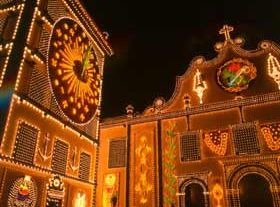
In São Miguel, in the Azores, witness the Festivals of the Lord Jesus Christ. The image of the Convento da Esperança, in Ponta Delgada, is paraded on (...)
In the beginning of May, the festivity of the crosses in Barcelos is the first annual great pilgrimage in the Alto Minho region.The town of Barcelos (...)
Every year in May, Monsanto celebrates the Festivity of the Crosses, also known as the Festivity of the Castle, that recalls the local population’s (...)