Suggestions
It's Portugal Time
With the World Cup kicking off, all eyes are on the pitch. The world is waiting to see the talent, the strategy, and the passion of a national team that always steps onto the grass to win. But our ability to put on a show and claim victory does not end when the referee blows the final whistle. Beyond the stadiums and the touchlines, Portugal fields a world-class squad made of experiences, landscapes, and flavours that are absolutely unbeatable.
We have united tourism with the world of football to present you with our official call-ups. We have drawn up the ultimate "Starting Eleven" for some of the country’s greatest assets: Waves, Flavours, Nature, Heritage and Golf. We are showing why Portugal stands among the best, both on and off the pitch. Meet the teams that are ready to play. It’s Portugal Time.
The starting eleven for surfers

Portugal’s coastline is a masterclass in tactical versatility, offering conditions that challenge the most daring athletes on the planet. This is a true lineup built on the balance between experience and boldness, with a strong attacking presence on both the left and the right. This is how we ride against the tide, facing the epic conditions that our sea has to offer.
Leading the defensive line with absolute authority is Nazaré, a global powerhouse famous for its colossal walls of water that demand ultimate courage. Right beside it, the legendary heavy barrels of Supertubos in Peniche complete an unbreakable centre-back pairing, internationally renowned for its power and consistency.
Dictating the rhythm of the game from the midfield is Ribeira d'Ilhas in Ericeira, a World Surfing Reserve that acts as the team's playmaker, offering the most consistent, world-class right-hand breaks. On the flanks, the vibrant energy and relentless pace of the Costa da Caparica guarantee constant dynamism just minutes from the capital, while the lines drawn at the iconic Arrifana beach on the Costa Vicentina bring the perfect balance of natural beauty and elite performance. This is a coast that knows exactly how to command the ocean.
The starting eleven for foodies

Portuguese gastronomy steps onto the pitch with a luxury call-up where every selection reflects excellence: a clear commitment to the richness of our heritage, the quality of local ingredients, and flawless tactical execution. Everything is ready; now all that is left is to savour what this team brings to the table.
Commanding the centre of the park with a historic presence and weight, we find the legendary Chanfana, a traditional dish slowly cooked in a black clay pot with red wine and garlic, dominating the game through robust and comforting flavours. On the frontline, the tactics are devastating: Porto’s imposing Francesinha leads the attack with its perfectly structured layers and secret sauce, closely supported by the mastery and identity of traditional Tripas à Moda do Porto.
On the wings, charcoal-grilled Sardines bring the authentic taste of the coast and the summer, playing at the highest level of freshness. As a surprise element straight from the bench, the Cozido das Furnas in the Azores harnesses volcanic heat and underground steam for a slow cook that opens up entirely new dimensions of flavour. To close the match in grand style and with global distinction, the sophisticated notes of Port and Madeira wines guarantee a memorable finish that stays in the memory long after the final whistle.
The starting eleven for nature lovers

For those who prefer the trails to the terraces, Portugal’s natural reserves and parks offer extraordinary versatility. This is a squad built on depth, resilience, and unpredictability, capable of opening up spaces, controlling the tempo, and changing the course of the match at any moment.
The wing-back positions are completely dominated by the majestic Peneda-Gerês National Park and the breathtaking trails of the Azores, both lending immense width, dramatic elevations, and a total sense of freedom to the game plan. Holding the defensive line is the imposing Serra da Estrela, commanding attention from the highest point of mainland Portugal with its glacial valleys and towering peaks.
In the creative midfield, the mystical, mist-shrouded forests of Sintra and the centuries-old Buçaco forest create a core full of enchantment, history, and pathways waiting to be explored. Completing this luxury squad, the dense, prehistoric Laurissilva Forest of Madeira offers a unique, verdant sanctuary, while the dramatic cliffs of Arrábida create the perfect play where the green mountains plunge straight into the deep blue of the Atlantic. This is nature operating at the highest tactical level.
The starting eleven for historians

History takes the field with a squad shaped by centuries of discoveries, kingdoms, traditions, and remarkable achievements. This is a team where every player tells a different chapter of Portugal's story, transforming the past into something that can still be explored, experienced, and understood today.
Leading the attack is Tomar, home to the monumental Convent of Christ and one of Europe's most important Templar legacies. Alongside it, the medieval strongholds of Marvão and Monsaraz hold their positions with commanding views over the landscape, while the prehistoric engravings of the Côa Valley remind us that Portugal's heritage stretches back long before its borders were drawn.
Controlling the rhythm of the game are places where history and everyday life continue to move together. From the riverside fortress of Almourol to the whitewashed streets of Óbidos and the stone houses of Piódão, each destination brings its own character, preserving centuries of heritage while remaining very much alive.
Completing this remarkable lineup are the Monastery of Batalha, a masterpiece of Portuguese architecture, the historic city of Bragança, the creative village of Cerdeira, and the magnificent Monastery of Alcobaça. Together, they form a team that proves Portugal's greatest stories are not only remembered, they continue to inspire new generations of explorers.
The starting eleven for golfers
Closing the manager’s selections, golf in Portugal presents itself as a true masterclass in precision, strategy, and flawless presentation. Built on greens and fairways that demand both tactical focus and an impeccable style, this team ensures world-class displays under the sun.
The star strikers of the squad are the award-winning championship courses of the Algarve and the Lisbon Coast, globally recognised for offering unbeatable playing conditions, challenging hazards, and stunning coastal backdrops that test the skill of any player.
Supporting them are the true tactical masters, hidden gems nestled along the cliffs or sculpted into the rolling hills of the country's interior, where every hole represents a new scenic challenge, a unique design, and a highly rewarding finish. Whether you are plotting the strategy for a complex dogleg or attempting a decisive putt with the ocean as a backdrop, this is an eleven designed exclusively for peak performance.
Whether on the pitch or beyond it, the real victory lies in exploring everything Portugal has to offer. It’s Portugal Time.
 Events


 Explore

 Remember and Share


Portugal, the art of travelling well
- Available soon -
Portugal, ett oskrivet recept
Portugal bjuder härmed in hela världen till att upptäcka vad det är som gör vår gastronomi så unik.
Rätter och ingredienser är förstås viktiga, med det är även hela upplevelsen. Den ska vara äkta och erbjuda färskhet, äkthet, kreativitet, hållbarhet och gästfrihet i ett enda recept. Portugisisk mat återspeglar verkligen landets kultur, där varje måltid berättar en historia och avslöjar en själ som lever och andas in landets och havets smaker.
Färska produkter från hav och land
Hemligheten med portugisisk mat börjar med färska ingredienser. Atlanten som smyckar kusten garanterar fisk och skaldjur av hög kvalitet och är en inspirationskälla. Föreställ dig att du åtnjuter nyfångad fisk som lagats på enklast möjliga vis för att framhäva dess naturliga smaker och som serveras med säsongens grönsaker.
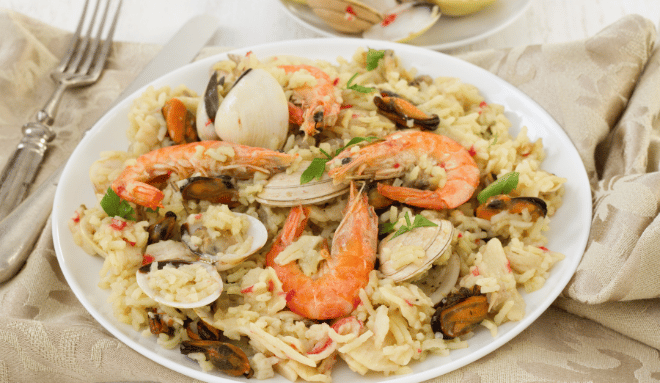
Din fisk kan tillagas på olika sätt beroende på i vilken del av landet du befinner dig. I Algarve i söder kan enkla och smakrika fiskrätter tillagas i en cataplana som återspeglar havets sanna smaker, medan det är grytor som tar fram smakerna i centrala Portugal. I Porto i norr är torsk som fiskare fångat i haven runt Newfoundland en favorit på det portugisiska matbordet, med många recept som är döpta efter den plats där de uppfanns: à Moda de (vilket betyder ”på ett specifikt vis”) Viana eller Braga eller Monção eller på annan plats, men den tillagas på hundra olika sätt över hela landet. Längsmed hela kusten tillför skaldjur en fräsch upplevelse till bordet.
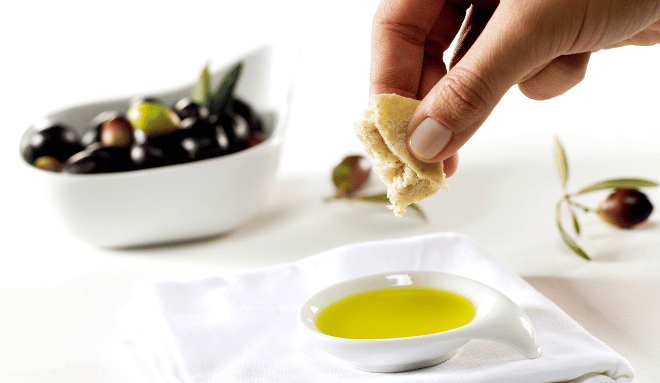
Färskhet är dock inte bara begränsad till ingredienser från havet. Färsk frukt, kryddörter och grönsaker som odlats på ett traditionellt sätt och med respekt för jorden spelar alla en nyckelroll i varje maträtt. Sambandet mellan naturen och smaker är en inbjudan att resa runt de olika landskapen och lära känna varje regions unika produkter. Alentejos utbredda slätter är rika på produkter som hyllar jordens smaker, såsom olivolja.
Ursprunglig äkthet
I Portugal innehåller varje maträtt en berättelse om sitt ursprung och hedrar traditionen samtidigt som det finns plats för innovation. Rätternas äkthet ligger i ingredienserna och expertisen hos de som lagar dem. Oavsett om det är ett gammalt recept som har gått i arv eller en modern nytolkning bevaras alltid den portugisiska matens sanna innebörd – den är enkel men smakfull samt traditionsenlig.
Den traditionella specialiteten espetada från Madeira bestående av marinerat nötkött som grillats på spett tillverkade av lagerträd och serveras med stekt majs speglar öns historia. Alheiras (en slags korv) från Trás-os-Montes är ytterligare ett exempel på kunnande som gått i arv från generation till generation. Många kockar har använt denna månghundraåriga delikatess som grunden för sina kreationer.
Kreativitet som förvandlar och flödar
Den nya generationen av portugisiska kockar förvandlar landets gastronomi med en modigare och mer intensiv inställning samtidigt som de hedrar arvet från de äldre generationerna. Dessa kulinariska konstnärer blåser nytt liv i traditionella maträtter, kombinerar dem med modernt inflytande och presenterar dem på ett sätt som kan vara överraskande. Varje måltid är som en tom målarduk där kreativiteten främjar smak, plats och form med en oförglömlig gastronomisk upplevelse som resultat. Och varje dag ser vi allt fler restauranger som vill följa med på resan, vilket speglar inspirationen som skaparna i köksförkläden tillför, och som är förtjusta att kavla upp ärmarna och gå till verket.
Hållbarhet i köket
Portugal som alltid är medveten om utmaningar inom miljöområdet strävar efter hållbarhet som en av grundpelarna i sin gastronomi. Respekt för naturens cykler och medveten användning av naturresurser är principer som återspeglas i de viner och maträtter som serveras på restauranger och karaktäristiska matställen. Hållbarhet, från lokal och organisk produktion till användning av alla delar av varje ingrediens, är mer än en trend: det är ett åtagande gentemot framtida generationer och ett tecken på respekt för allt det som jorden har att erbjuda.
Ett varmt välkomnande
Gästfriheten är en av den portugisiska gastronomins största kännetecken, vare sig du äter på en prisbelönt restaurang eller på en traditionell krog. Den generositet med vilken maträtter lagas och serveras speglar enkelheten hos ett folk som alltid har varit varmt välkomnande. I Portugal handlar en måltid inte bara om att stilla hungern utan det är en sällskaplig samvaro där frikostighet, gemytlighet och glädje över att få sitta runt ett bord tillsammans är basingredienser – ett faktum som förevigades av fadosångerskan Amália Rodrigues i sången ”Uma Casa Portuguesa” (”ett portugisiskt hem”). Varje måltid är en hyllning till livet, där njutningen av att äta förenas med det varma välkomnande som det portugisiska folket erbjuder sina gäster och besökare.
Portugal på bordet: en unik upplevelse
Portugisisk mat är en upplevelse i äkthet, färskhet, kreativitet, hållbarhet och gästfrihet. Det är en resa genom de fem sinnena där du upptäcker kulturen och traditionerna hos ett land som gör gastronomi till en äkta konst.
Kom och sätt dig vid Portugals bord och känn dig som hemma omgiven av oförglömliga smaker, berättelser och en frikostig dos av gästfrihet. Portugisisk gastronomi är mer än bara en måltid – det är en inbjudan att njuta av livet i all sin prakt.
Portugal, an unwritten recipe
Portugal is extending an invitation to the world: come and discover what makes our gastronomy unique.
The dishes and ingredients are important, of course, but so too is the overall experience, one that is meant to be genuine and which combines freshness, authenticity, creativity, sustainability and generosity in a single recipe. Portuguese cuisine is a true reflection of the country’s culture, where each meal tells a story and reveals a soul that lives and breathes the flavours of the land and the sea.
Portugal at the table: a unique experience
Portuguese cuisine is an experience of authenticity, freshness, creativity, sustainability and generosity. It is a journey through the five senses, in which you discover the culture and traditions of a country that makes gastronomy a true art.
Freshness from the sea and from the land

The secret of Portuguese cuisine begins with the freshness of the ingredients. The Atlantic Ocean that bathes the coast guarantees quality fish and seafood and is a source of inspiration. Imagine yourself savouring some freshly-caught fish, prepared in the simplest of ways to enhance its natural flavour and served with seasonal vegetables.
Your fish may be cooked in different ways depending on the region. In the Algarve, to the south, simple and tasty fish dishes can be made in a cataplana, reflecting the authentic flavour of the sea, whereas In Central Portugal, it is the stews that bring out the flavours. Meanwhile, in Porto and the North, the cod brought by fishermen from the seas of Newfoundland became a favourite at Portuguese tables, with many recipes adopting the names of places where they were invented: à Moda de (which means “in the style of”) Viana or Braga or Monção or wherever, but it is cooked in hundreds of different ways all over the country. All along the coast, seafood brings refreshing experiences to the table.
Freshness is not limited to ingredients from the sea, however. Seasonal fruits, aromatic herbs and vegetables, grown in a traditional way and with respect for the land, all have a key role to play in every dish. The connection between nature and flavours is an invitation to travel through the landscapes and get to know the authentic products of each region. In the case of Alentejo, its vast plains are rich in products that celebrate the flavours of the land, such as olive oil.
Authenticity from within

In Portugal, every dish carries the history of its origins, respecting tradition but still leaving room for innovation. Their authenticity lies in the ingredients and expertise of those who prepare them. Whether it’s an old recipe that’s been handed down or a contemporary reinterpretation makes no difference; the true essence of Portuguese cuisine will be maintained regardless, simple yet flavourful and true to tradition.
Consisting of marinated beef, cooked on laurel stick skewers and served with fried corn, the traditional Madeiran kebab is a dish that reflects the island’s history. Alheiras (a type of cured sausage) from Trás-os-Montes are another example of know-how handed down from generation to generation. A number of chefs have used this centuries-old delicacy as the basis for their creations.
Creativity that transforms and overflows

The new generation of Portuguese chefs is transforming the country’s gastronomy, taking a bolder and more vibrant approach, while still respecting the legacy of generations past. These culinary artists breathe new life into traditional dishes, combining them with modern influences and presenting them in ways that might surprise you. Every meal is a blank canvas, where creativity nurtures flavour, space and shape, resulting in unforgettable gastronomic experiences. And every day we see more and more restaurants signing up for the ride, reflecting the inspiration of the apron-clad creators, who are delighted to roll up their sleeves and get to work.
Sustainability in the kitchen

Ever-mindful of environmental challenges, Portugal is committed to sustainability as one of the pillars of its gastronomy. Respect for the cycles of nature and the mindful use of natural resources are practices that are reflected in the wines and dishes served in restaurants and typical eateries. From local and organic production to making use of every part of every ingredient, sustainability is more than a trend: it is a commitment to future generations and a mark of respect for what the earth has to offer.
A generous welcome

Portuguese hospitality is one of the biggest calling cards of its gastronomy, whether you eat in an award-winning restaurant or in a traditional tavern. The generosity with which the dishes are prepared and served reflects the simplicity of a people who always extend the warmest of welcomes. In Portugal, eating is not just about satisfying hunger; it is a social occasion, where sharing, conviviality and the joy of being together at the table are fundamental ingredients – a fact immortalised by fado singer Amália Rodrigues in the song "Uma Casa Portuguesa" (“A Portuguese Home”). Every meal is a celebration of life, where the pleasure of eating blends with the warm welcome that the Portuguese offer to their guests and visitors.
Come and sit down at Portugal’s table and feel at home, surrounded by unforgettable flavours, stories and a generous dose of the art of hospitality. Portuguese gastronomy is more than just a meal; it is an invitation to savour life in all its splendour.
Save Water
Embark on a journey of discovery and sustainability in the Algarve.
Soak up the sun, enjoy the best swims in the sea, and as you immerse yourself in the beauty of the landscapes and Algarve culture, consider the importance of conserving water during your stay. Choose to use water efficiently in the territory you are visiting. Every little gesture counts!
Water is one of the planet's primary resources, and its conscious use presents a challenge for each and every one of us. In Portugal, we are committed to minimizing climate change by preserving this resource. Therefore, we invite you to enjoy the destination differently, with a heightened awareness of nature protection and a balanced approach to natural resource usage. Join us in preserving this essential resource for life.

Did you know…?
A conscious and responsible tourist can save up to 235 liters of water daily during their stay by choosing to consume below-average amounts? Get involved, support local communities, minimize your environmental footprint... make a difference for a better planet. Save water. Protect the future.
To ensure that your visit has a positive impact, we suggest adopting small habits to save water while travelling.
Save water
We often use more water than necessary without realizing it. Opt for shorter showers or turn off the water while soaping.
Choose efficient accommodations
Choose accommodation units that implement water-saving technologies, such as using low-flow faucets and recycling systems.
Reuse towels
Let your accommodation know if you'd like to reuse towels to save water. It’s a well-known practice, but it never hurts to reinforce it.
Respect water sources
In the territories, avoid wasting water in leisure activities and use it responsibly in swimming pools and spas.
Stay informed
Learn more about the importance of water in the region and how you can contribute to conservation efforts during your stay in Portugal.
Reduce plastic use
Support local initiatives to reduce plastic waste and contribute to global water conservation efforts.
Adopt these simple habits, contribute to the sustainability of tourism in Portugal, and make a difference in preserving natural beauty for future generations.
For a Better Planet, Better Tourism. This is not Tourism. This is Futourism.
Close to US. Close to Portugal.
Would you rather dream of galaxies far far away or would you rather get close to a new universe? Situated in the extreme south-west of Europe, Portugal and the US are only separated by the Atlantic Ocean.
Portugal is the country with the oldest borders in Europe, with an exceptional range of different landscapes just a short distance away. The highlights of Portugal's attractions are culture & heritage, the gastronomy, not to mention the beaches, surfing, nature, and friendly people making it a tourist paradise.
The best that Portugal has to offer was shown on Times Square digital billboards, in New York, on the 18th November, while the Madame Tussauds Museum announced its new wax figure: Cristiano Ronaldo, a Portuguese well-known throughout the world.
And do you know why Portugal is worth visiting? We’ll give you some clues here.
The cities: Lisbon and Porto
Lisbon and Porto are two very attractive cities. Both are bathed by a river that gives them a characteristic and different environment. They are hospitable places with their historic neighbourhoods and streets with tiled façades, to get to know by day or enjoy on a night out, along with examples of modern architecture and urban art, and they also have a really diverse and creative cultural agenda. Lisbon is a city with a special radiance, which comes from the Tagus river and the proximity of the sea. Porto, an ancient city, whose historic centre has been classified as World Heritage, is the point of arrival of the River Douro, on whose valley slopes the famous Port wine is cultivated.
Sun, Beach, Sea and Surfing
The presence of the Atlantic Ocean and the climate, with very sunny summers and mild winters make Portugal a holiday destination renowned for sun and sea and walks on the beach throughout the year. More than 850 km with golden sand offering a diversity of landscapes that allows you to choose between the rougher and cooler sea in the north and the warm, placid waters of the south.
Surfers of all types find on the Portuguese coast the largest number of spots with the least distance between them. There are perfect tubular waves in Peniche, giant waves in Nazaré, and the longest in Europe in Figueira da Foz. Ericeira, meanwhile, was the 1st Surfing Reserve in Europe and 2nd at world level. So you see, you can come to Portugal a number of times and always get a different wave!
Nature and Cycling & Walking Trails
The Natural Parks and Reserves, Geoparks and Biosphere Reserves recognised by UNESCO have ensured that Portugal is also a destination very appreciated for enjoying outdoor activities, whether they are more contemplative, such as bird watching, or more extreme, like canyoning. In the last few years, following nature trails on foot or by bike has been a good choice for those who like to combine physical exercise and contact with the local culture.
World Heritage
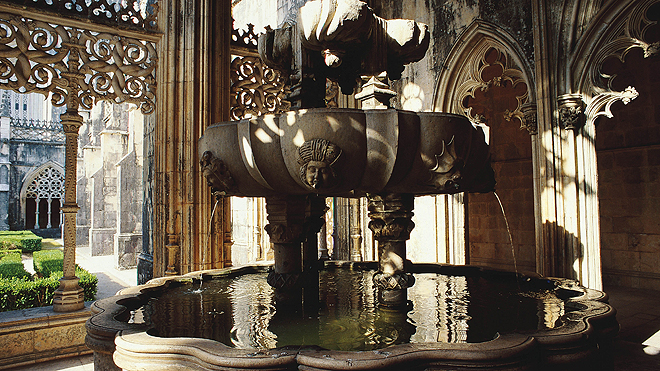
The 17 World Heritage Sites in Portugal portray the history and culture of the country, its people and the peoples that have inhabited the land since time immemorial. Monasteries and convents of historic and artistic importance, outstanding monuments, historic centres, cultural landscapes, which offer some of the most beautiful natural scenery in Portugal, were considered by UNESCO as being a part of World Heritage.
A visit to these Portuguese contributions to world history are a must and a good excuse to get to know the country from north to south.
The last, but not the least one of the things that tourists notice most when they visit us, is the hospitality and friendliness of the Portuguese, who are always ready to help if they are stopped on the street and asked for information. Perhaps it is the sun which gives us a good disposition, to welcome anyone, wherever they’re from…
Today we are closer than ever. And we intend to keep it that way. Because when we treasure something, we keep it close to us.
Get closer to Portugal.
3 Days in Portugal
In the extreme southwest of Europe, Portugal is a unique country that justifies a delayed visit. Bathed by the Atlantic Ocean, it is a country known for its beaches and the practice of outdoor activities and the fact that it has a good climate, with mild winters, allows it to be visited all year round. The vast cultural heritage is somehow represented by the 21 UNESCO classifications as World Heritage, that reflect the most important periods of Portuguese history and culture.
However, if you only have 2 or 3 days to visit Portugal, we suggest you to visit at least Lisbon and Porto, the two most important cities in the country.
Two days in Lisbon Region
Day 1
The historical neighbourhoods of central Lisbon are perfect for visitors. Their culture, the history, the architecture and the people are fundamental aspects of Lisbon’s identity. The Bairro Alto is one of the most characterful and attractive neighbourhoods in the city – it has boutiques and bars and is a place where people meet in an eclectic and multicultural atmosphere. 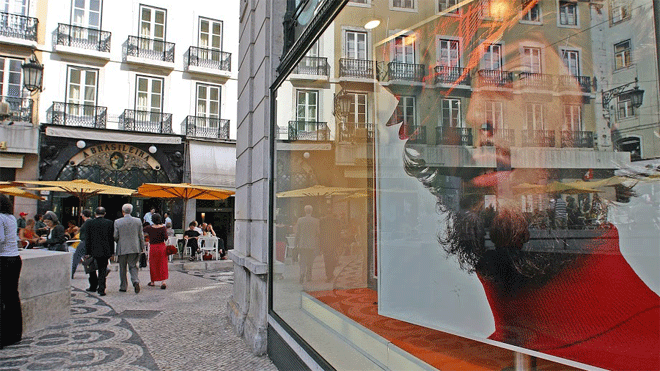
Photo: Chiado, Lisboa by José Manuel
From Bairro Alto stroll down to Chiado, the sophisticated hub for the city’s young people, artists and intellectuals. It is an area of iconic cafés including “A Brasileira”, art schools, and theatres.
The Carmo area, next to Chiado, has some fascinating historical sites, such as the Convent and Church of Carmo, which maintains their elegance and grandeur. Carmo is connected to Baixa by the Elevador de Santa Justa, designed by a disciple of Gustave Eiffel, Raoul Mesnier du Ponsard. It is open to the public and boasts impressive views over the downtown of Lisbon.
The Baixa is the city's traditional shopping district where visitors can stroll around the streets and find dozens of shops offering a wide range of “temptations”.
When there is no time to shop during a tour of the historic districts of the city, you can concentrate all your energies on the shopping centres: Amoreiras, Columbo and Vasco da Gama are the largest, but Campo Pequeno and Saldanha are also alternatives worth considering. 
Photo: View from São Jorge Castle, Lisboa
Highlights
Start your tour at Miradouro de São Pedro de Alcântara and walk around downtown Lisbon and Chiado
- Visit to Lisbon São Jorge Castle and walk down Alfama
Although it was at the castle that everything began, historical sites can be found across the city. As the capital of the Portuguese Empire, Lisbon boasts a thousand years of history, and is peppered with monuments of great importance, reflecting the key moments in the country’s history.
- Visit Terreiro do Paço and Rua Augusta Arch
Rua Augusta is the main artery of the Baixa Pombalina leading north from Terreiro do Paço (known as Black Horse Square by the English), to the beautiful Praça do Rossio (Praça Dom Pedro IV).
- Shopping in Avenida da Liberdade
Discover Avenida da Liberdade, which in the 19th century was the favourite promenade for the Lisbon elite. Today, the Avenida is home to exclusive international boutiques to tempt and inspire.
- Take a tram tour through the historic districts
- Dinner in a Restaurant with Fado
Day 2
Sintra
In the morning, visit Sintra Downtown and Pena National Palace (UNESCO Heritage).
Photo: Palácio da Vila, Sintra
Sintra is an inexhaustible attraction. The perfect symbiosis between nature and its built heritage led to its classification by UNESCO as World Heritage, at the category of Cultural Landscape, in 1995. The town has been adored over the years by artists and writers from all over the world and the passion for the town reached its peak in the 19th century, in the heart of the romantic era. Essentially, it is the perfect fusion between natural richness and the magnificence of its monuments, combined in an extreme beauty.
In the Historic Town Centre, stands the Paço Real, one of the many monumental buildings surrounded and watched over by the grandeur of the Serra de Sintra, which offers endless different walks.
Sintra has unique examples of parks and gardens and has influenced many European landscapes. The highlights are Parque da Pena and Jardins de Monserrate. High in the Serra, on one of its steep peaks, we can find the Palácio da Pena, the most complete and notable example of Portuguese Romantic architecture, recently restored and painted in the original colours and standing out among the surrounding greenery. Built on the site of the ruins of the Mosteiro Jerónimo de Nossa Senhora da Pena, the palace dates back to 1839. 
Photo: Cabo da Roca
Visit Cabo da Roca and return to Lisbon taking the coastal road of Cascais and Estoril. Cabo da Roca is the most westerly point in mainland Europe and it was immortalised by the poet Camões as the place “where the earth finishes and the sea starts”.
Belém
In the afternoon, visit the neighborhood of the Discoveries. Next along the riverside it has a large number of heritage sites connected with the Portuguese voyages of discovery. It was from the beach in Belém that Vasco da Gama, in 1497, set sail to discover the sea route to India and the grandiosity of the former empire can be sensed throughout the area. One of the most imposing symbols of the city is here - the Mosteiro dos Jerónimos, the construction which was started in 1501 by King Manuel I and finished a century later. Royal, religious, naturalist and nautical decorative elements combine to create a building that is considered the jewel of the distinctively Portuguese Manueline style, and has been recognised as a World Cultural Heritage site by UNESCO. 
Photo: Belém
One Day in Porto
On a brief visit to Porto, there are some places that cannot be missed. Many visitors agree the city has something mystical that is difficult to describe and which varies according to the place, time of day and light.
Morning - Visit Douro Region
Porto's best known images show the views over Porto riverside (the “Ribeira”) and Vila Nova de Gaia wharf. It is the arrival point of the unique Rabelo boats that transport the wine to the cellars where it ages but also the starting point of many cruises that go up the river Douro. The Douro Valley Region is classified as World Heritage by UNESCO and it is the oldest demarcated wine region in the world, where Porto wines and Douro wines are produced. 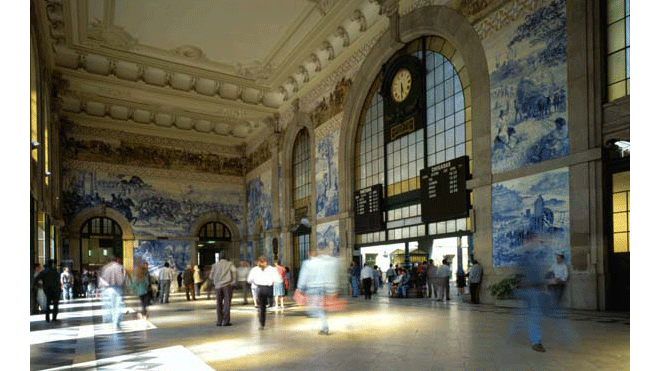
Photo: São Bento train station, Porto
Afternoon - Visit Porto downtown
Walk around the old and narrow streets, passing by the most interesting landmarks of the city including the Cathedral, the Clérigos Tower, ex-libris of the city, the exquisite book shop LELLO, the old grocery shops and boutiques, the colourful squares, and the new quarters of Cândido dos Reis street and Galeria de Paris street, where one can find and enjoy the best of the night life in Porto downtown with its trendy and design cafés and bars.
Don’t miss the Café Guarany, Bolhão traditional market, Sta Catarina street, the best shopping area where you can find the historic Café Majestic, and São Bento train station, covered with painted glazed tiles.
From the city centre, go down towards the River Douro and Ribeira old quarter. It is one of the most attractive districts of Porto, in which you get a feel for the ancient vernacular ambience.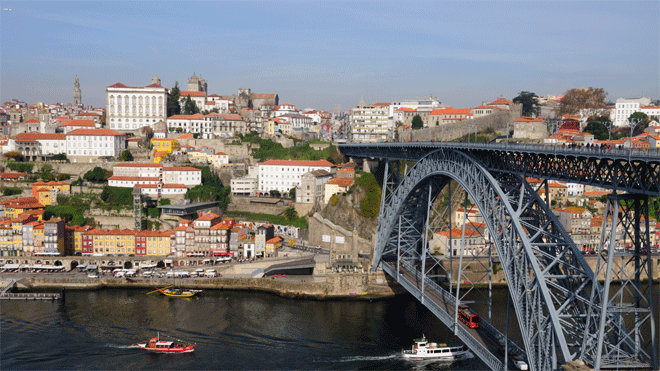
Photo: View from Serra do Pilar, Porto by Rui Rebelo
Highlights
- Starting point: São Bento Train Station
In the old downtown, São Bento Train Station is the point of arrival by train and a key geographical reference from where you can start any tour of the historical center, classified World Heritage by UNESCO. In the train station, don’t miss the impressive main hall covered with glazed titles depicting historic scenes.
- Porto delicatessen
Try a francesinha (a sandwich with cured ham, sausage, and steak covered in molten cheese and a hot tomato and beer sauce), one of Porto’s specialities, as well as fresh fish, seafood, or some codfish cakes.
- Porto school of Architecture
Porto is also known for its school of architecture. One of the most important references is the Serralves contemporary art museum, a work of Álvaro Siza Vieira, one of the foremost architects of the Porto School and winner of the Pritzker Prize.
- The best views
Porto has some belvederes that offer unique views over the city. Try the top of Luis I Bridge, crossing the river to Serra do Pilar Monastery, the historical Clérigos Tower, the precinct of the Cathedral and the gardens of Palácio de Cristal (Crystal Palace). All of them are worth visiting.
Visitportugal WeChat
If you're looking for information about Portugal, please follow the official Visitportugal Wechat

What to do near Lisbon?
Lisbon is a modern capital with excellent accessibility. Start with the city centre area known as the Baixa. This is the heart of the city, where you will find Santa Justa elevator and the monumental square Praça do Comércio that opens on to the River Tagus. Climb to the Castle of São Jorge and stroll through Alfama to listen Fado. Take a tram ride to the Jerónimos Monastery and the Tower of Belém. Don’t forget to try the delicious Pastel de Belém (custard tart).
Learn more: 10 things to see and do in Lisbon
Maat, Lisboa ©Stock Photos Art
Cascais and the Estoril Coast
(Half-hour drive)
Since the 19th century, Cascais and Estoril have been among the most cosmopolitan locations and of greatest interest to tourists. Take the coastal road from Lisbon to Cascais. It’s a pretty and pleasant trip with ample views of the river and ocean. You can visit the historic centre of Cascais, discover amazing restaurants or simply enjoy a lovely walk with friends and family.
Learn more: Visit Cascais and the Estoril Coast

Cascais © José Manuel
Sintra
(Half-hour drive, about 40 minutes by train, north of Lisbon )
Romantic and mysterious, the town of Sintra is truly unique. With its picturesque village, majestic palaces and fairy-tale castle, against a backdrop of mountains and lush forests, Sintra stands out as one of Portugal’s most enchanting places. And guess what? It’s only 30 mins away from Lisbon.
Learn more: Discovering Sintra
Castelo dos Mouros, Sintra ©José Manuel
Ericeira
(30 minutes drive, north of Lisbon)
The route following the sea north of Lisbon is one of the most popular tours of the Portuguese coast. Along the way there are some great surprises, like Ericeira, a fishing village with a lot of tradition linked to the sea, now recognised as one of the world’s surfing reserves.
Lern more: “Ericeira, Surfing Reserve”
Ericeira © Turismo de Lisboa
Óbidos
(One-hour drive, north of Lisbon)
The medieval town of Óbidos is a real time capsule. Recently recognised as a UNESCO City of Literature, Óbidos has become synonymous with romance and literature. History, crafts, great cafés and restaurants, churches and monuments, beautiful architecture, all just a few steps away.
Learn more: Visit Óbidos
Óbidos © Shutterstock
Peniche and Berlengas
(1h drive, north of Lisbon)
Peniche and the sea are inseparable. It is one of the largest traditional fishing ports in Portugal and a major Atlantic hub for maritime-tourist activities.
The Nature Reserve on the Island of Berlengas is a boat ride away. Its translucent waters are ideal for divers, who will find here a natural sanctuary for sea flora and fauna.
Learn more: Peniche
Ilha das Berlengas © José Manuel
Arrábida
(45 minutes drive, south of Lisbon)
Located next to the sea, between Setúbal and the fishing town of Sesimbra, Arrábida Natural Park has incomparable natural beauty, where the blue of the sea alternates with the white tones of the chalk cliffs and the depths of the green vegetation that covers the mountain range.
The action of the sea against the mountains has originated a line of beaches characterised by fine sand and transparent waters, that we might otherwise believe could only be found in the Mediterranean, such as Figueirinha, Galapos and the Portinho da Arrábida.
Learn more: Serra da Arrábida and the Sado Estuary
Galapinhos, Parque Natural da Arrábida © Câmara Municipal de Setúbal
Troia
(1h drive, south of Lisbon)
The Troia Peninsula is a must-see destination with its extensive, highly prized beaches. There is a range of activities that can be enjoyed in a single day or over a weekend in Troia: outdoor sports such as golf or cyclin on dedicated paths, nautical sports such as windsurfing and sailing, boating, dolphin watching and walks on the beach, all while enjoying views sure to be etched forever in the memories of all visitors.
Learn more: A weekend in Troia

© Shutterstock